The questionBook a free demo

Every child has asked it.

What’s up there?

Scroll
Astris Space

Astris Astronomy Club

Real astronomy, every week, linked to the syllabus your students already study. At zero cost to your school.

The spark

23 August 2023

When Chandrayaan-3 touched down near the Moon’s south pole, children across India looked up.

India now celebrates National Space Day on 23 August.

Aditya-L1, India’s solar observatory, watches the Sun from about 1.5 million km away.

The curiosity is already there.

The gap

Good ideas meet real constraints.

  • 1Budget

    Labs and equipment need approvals and time.

  • 2Timetable

    No room for a new subject or new exams.

  • 3NEP 2020

    Schools are expected to show experiential, inquiry-led STEM, which needs specialist staff and equipment.

  • 4Parents

    They back what shows visible results.

“Curiosity is everywhere. A way to keep it going every week is not.”

The answer

An Astris-run astronomy club that costs your school nothing.

  • 32weekly sessions
  • 3grade bands
  • 7telescope sessions
  • Rs 0cost to the school

The school gives a room and a weekly slot. Astris brings the educators, telescopes, kits, enrolment and reports. Parents enrol directly with Astris, just as with the robotics, debating and F1 in Schools clubs many Delhi schools already host.

Week 7: The Moon and its phases.

One sky, three lenses.

The whole club explores the same theme each week. A Grade 4 child and a Grade 12 student never get the same lesson. Each band learns through the chapters it is studying in class. The club applies the syllabus a student already has. It is never an extra subject.

  • Grades 4–6notice and describe

    Explorers

    Act out the phases with a lamp and a ball, then start a month-long Moon diary.

    Classroom link: EVS / Science: the Moon and the sky; light and shadows.

  • Grades 7–9explain and measure

    Navigators

    Model the Sun–Earth–Moon geometry and predict when the next eclipse is possible.

    Classroom link: Science: light and shadows; motions of the Earth and Moon.

  • Grades 10–12calculate and analyse

    Astronomers

    Use Kepler’s third law to find the Moon’s distance from its orbital period, then check against real data.

    T = 27.3 days → a = ∛(GMT²/4π²) ≈ 383,000 km · measured: about 384,400 km

    Classroom link: Physics Class 11: Gravitation.

How a session runs

Inside one hour

of 60 minutes
  1. 10 min together, the sky hook

    The whole club meets the week’s theme through a demo, an image or a live view of the Sun.

  2. 40 min in band pods

    Each band works with its own Astris educator, worksheet and activity, built from its own textbook chapters.

  3. 10 min share-back

    Each pod presents one finding. Seniors explain to juniors; juniors ask the questions seniors hadn’t thought of.

  • One Astris educator per band pod.
  • A band with fewer than 8 students joins the next band but keeps its own worksheet tier.
  • No exams, no homework beyond a short observation logbook.

Grade 4 to Grade 12, never the same session twice.

  • Year A · Earth, Moon and Sun

    Seasons, Moon phases, eclipses, telescopes, the Sun up close, Chandrayaan and Aditya-L1.

    Signature: A year-long sunspot log.

  • Year B · Planets and spaceflight

    Planets, gravity and orbits, rockets, satellites, comets and asteroids, Mangalyaan and India’s launch vehicles.

    Signature: A water-rocket launch day.

  • Year C · Stars and the Universe

    Constellations, starlight and spectra, the life of stars, galaxies, exoplanets, black holes and the Big Bang.

    Signature: A deep-sky night on the Orion Nebula.

  • No repeats within a band

    Each band spans three grades and the cycle spans three years.

  • A deeper return

    When Year A comes round again in Grade 7, it is taught through Grade 7 chapters. The Moon a student first sketched is now a geometry problem.

  • Join in any year

    Every year stands alone.

9 years.

A member who stays from Grade 4 to Grade 12 goes through the cycle three times, each time at a deeper level.

Personal levels

Levels that rise every year

Alongside their grade band, every member earns a personal level that carries over year to year. Educators check levels for skills shown under the sky each October and February.

  1. Level 1

    Sky Cadet

    Finds 10 constellations, the bright planets and the Moon’s main features by eye, and reads a planisphere.

    Earns a Cadet badge and certificate.

  2. Level 2

    Telescope Operator

    Sets up, aligns and focuses a telescope alone, and runs safe solar viewing for others.

    Earns an Operator badge and can join the sky-watch crew.

  3. Level 3

    Astro-imager

    Captures and processes their own images of the Moon and planets, and explains what they show.

    Work is shown at the showcase; eligible for Astris expeditions.

  4. Level 4

    Mission Specialist

    Completes an independent observation project and mentors younger members through a full year.

    Earns a letter of recommendation from Astris Space.

Roles for returning members

  • Sky-watch crew

  • Pod mentors for the Explorers

  • Research track

    Real asteroid-search campaigns with the International Astronomical Search Collaboration.

  • Olympiad track

    Preparation for the National Standard Examination in Astronomy (NSEA).

The club year

The year, April to February

Showing Year A · Earth, Moon and Sun

  1. Apr4 sessionsLaunch
  2. May2 sessionsBreak from mid-May
  3. Jun0 sessionsSummer vacation
  4. Jul4 sessionsMonsoon: indoor
  5. Aug4 sessionsNational Space Day
  6. Sep3 sessionsHalf-yearly exams
  7. Oct3 sessionsWorld Space Week
  8. Nov3 sessionsDiwali break
  9. Dec3 sessionsWinter break
  10. Jan4 sessionsClear winter skies
  11. Feb2 sessionsShowcase
  12. Mar0 sessionsAnnual exams

The session mix · About 37 contact hours

  • Concept sessions ×12 (60 min: one theme, taught three ways)
  • Hands-on builds ×6 (60 min)
  • Solar observations ×4 (60 min, daytime, through certified solar filters)
  • Night sky-watches ×3 (2 hrs, evening, with families)
  • Space film sessions ×3 (90 min, then a “science or fiction?” discussion)
  • Scientist interactions ×2 (60 min, live talk and Q&A)
  • Quiz and showcase ×2

Year A week by week: Earth, Moon and Sun

  1. 1Welcome to the cosmos: club launch, sky quiz, level check-in, logbooksApr · Concept session
  2. 2Our place in space: Earth, Moon and Sun to scaleApr · Concept session
  3. 3Build: planisphereApr · Hands-on build
  4. 4Solar observation 1: safe-viewing drill, first sunspot sketchApr · Solar observation
  5. 5Day, night and seasonsMay · Concept session
  6. 6Film session 1: a Moon film, then “science or fiction?”May · Space film session
  7. 7The Moon and its phasesJul · Concept session
  8. 8EclipsesJul · Concept session

It meets their own textbook

Every theme meets a chapter they already study.

Club theme

Year AClub theme

The Moon and eclipses

Navigators · Grades 7–9 · in their NCERT books

Science: light and shadows; eclipses and the Earth–Moon–Sun system

Same theme, the other bands

One theme a week for the whole club, taught through each band’s own chapters.

  • Chapter titles are matched to the school’s own NCERT editions at onboarding.
  • ICSE mapping is available on request.
  • Astronomers practise CBSE competency-based questions with real data.
See the full CBSE / NCERT mapping (10 themes)
Club themes mapped to NCERT chapters for each grade band
ThemeExplorers (4–6)Navigators (7–9)Astronomers (10–12)
Scale and measurement (B)Maths: large numbers; Science: measuring length and distanceMaths: exponents and powers; Science: motion, speed and timePhysics XI: Units and Measurement (parallax, the light-year)
Day, night and seasons (A)EVS: the Sun, shadows, day and night; Geography: the Earth’s rotationGeography: motions of the Earth, latitudes and longitudesGeography XI: solar radiation, heat balance and temperature
The Moon and eclipses (A)EVS: phases of the Moon; Science: light and shadowsScience: light and shadows; eclipses and the Earth–Moon–Sun systemPhysics XI: Gravitation (orbits, Kepler’s laws)
Constellations and star maps (C)EVS: our sky, the Pole Star and directionsGeography: the globe; Maths IX: Coordinate GeometryMaths X: Some Applications of Trigonometry; Maths XI: angles and coordinates
Telescopes and light (A)Science: light, shadows and reflectionScience: light, mirrors and lensesScience X: Light – Reflection and Refraction; Physics XII: Ray Optics and Optical Instruments
Rockets and India in space (B)Science: force, push and pullScience VIII: force and pressure; Science IX: Force and Laws of MotionPhysics XI: Laws of Motion (momentum); Work, Energy and Power
The Solar System and gravity (B)Geography: the Earth in the Solar SystemScience IX: GravitationPhysics XI: Gravitation (satellites, escape velocity)
The Sun and its energy (A)EVS / Science: sunlight, heat and energyScience: heat and its transfer; sources of energyPhysics XI: Thermal Properties of Matter; Physics XII: Nuclei
The life of a star (C)Science: materials and states of matter (gases)Science IX: Matter in Our Surroundings; Atoms and MoleculesPhysics XII: Nuclei (fusion); Atoms
Starlight, galaxies and exoplanets (C)Science: light and colours (the rainbow)Science IX: Structure of the Atom; light and colourScience X: The Human Eye and the Colourful World; Physics XII: Electromagnetic Waves, Atoms

Titles for Classes 9–12 are exact NCERT chapter names. Classes 4–8 use topics because the new NCERT books renamed many chapters; we match them to the school’s editions at onboarding.

The club adds no subject, no syllabus and no exam. It gives students a reason to understand the ones they already have.

Textbook, logbook and builds

What students take home

The textbook

One picture-led page per session, never more, with a separate edition for each band and each cycle year. This is the real Navigators page for Session 7.

Astris Astronomy Club
Textbook · Year A · Navigators
Navigators · Year ASession 7Concept · The Moon and its phases

Why does the Moon change shape?

Big idea: The Moon is always half lit by the Sun. What changes is how much of that lit half faces us.

The Moon makes no light of its own. Sunlight always lights the half of the Moon that faces the Sun. As the Moon travels round Earth, we see more of that sunlit half, then less. At position 1 the Moon sits between us and the Sun, so its dark side faces us: a New Moon. At position 5 it is opposite the Sun, and we see the whole lit face: a Full Moon. One full cycle of phases takes about 29.5 days. Because the Moon keeps moving along its orbit, it rises on average about 50 minutes later each day.

Try this tonightSketch the Moon at the same time on 5 nights in the Moon diary row of your Try-this notes. Note the time it rises if you can. Is the lit side growing or shrinking? Predict night 6.
Words to knowWaxing: the lit part is growing
Waning: the lit part is shrinking
Gibbous: more than half lit
In your class textbook: Science, light and shadows; eclipses and the Earth–Moon–Sun system7

The logbook

Members record what they see, build and discover. A Sky-watch 1 sheet from the Navigators logbook, labelled as a sample.

Astris Astronomy Club
Logbook · Year A · Navigators
Sky-watch 1Session 20 · October · with families
Year A · Navigators

Moon craters and mountains

Observer
Sample page
Date
Time (IST)
Place
Sky tonight✓Clear (ticked)HazySome clouds✓City lights (ticked)
Sketch the Moon through the telescopeShade the dark part. Mark the terminator line.
Phase name
Waxing gibbous
Magnification
Altitude (fists × 10°)
Direction
Features I found (if lit tonight)✓Mare Tranquillitatis, the Sea of TranquillityMare Imbrium, the Sea of ShowersCrater Copernicus✓Crater Tycho and its raysCrater PlatoThe Apennine mountains
Why do craters look sharpest near the terminator?
Something I explained to my family tonight
My prediction: the Moon’s phase one week from tonight
Level skill practisedTelescope Operator: focuses on the Moon and names five lunar features
Educator
stamp
Logbook · Evening sky-watch5

Every logbook, every year:

  • 4solar sheets
  • 3sky-watch sheets
  • 6build records
  • 1level checklist

18 builds across the cycle

Most builds go home; each is designed to use household materials, and Astris supplies only the hard-to-find parts.

Download the kit guide (PDF)
  • Year A

    Planisphere star finder

    A rotating star map that shows which stars are up at any date and time

  • Year A

    Moon-phase and eclipse model

    A working Sun–Earth–Moon model that recreates every phase and both kinds of eclipse

  • Year A

    DIY refracting telescope

    A real two-lens telescope that shows craters on the Moon

  • Year A

    Pinhole solar projector

    A box that projects a safe image of the Sun, sunspots included

  • Year A

    Sundial

    A pocket sundial that tells time from the Sun’s shadow

  • Year A

    Moon crater experiment

    A tray of “Moon dust” that shows how craters and rays form

  • Year B

    Scale Solar System walk

    A paper strip that turns the Solar System’s distances into a walk

  • Year B

    Gravity-well orbit model

    A stretched sheet that shows how gravity bends paths into orbits

  • Year B

    Pins-and-string orbit tracer

    Two pins and a loop of string that draw a true planetary orbit

  • Year B

    Mars lander drop challenge

    Design a lander that keeps its “astronaut” safe from a two-storey drop

  • Year B

    Water rocket

    A soda-bottle rocket that flies 30 metres or more on water and air

  • Year B

    Paper Mangalyaan model

    A fold-up model of India’s Mars Orbiter, with every part labelled

  • Year C

    Constellation viewer

    A tube that projects constellations onto a wall or ceiling

  • Year C

    CD spectroscope

    An old CD and a cereal box that split light into a rainbow spectrum

  • Year C

    Parallax rangefinder

    A card sight that measures distance the way astronomers measure stars

  • Year C

    Star life-cycle wheel

    A two-layer wheel that follows a star from birth to its end

  • Year C

    Expanding-universe balloon

    A balloon covered in “galaxies” that shows the Universe stretching

  • Year C

    Exoplanet transit detector

    A lamp, a ball and a phone light-meter that find a “planet” the way NASA does

Also included

  • LMS access for their grade
  • 2 family seats at each evening sky-watch
  • Club T-shirt and badge
  • End-of-year certificate from Astris Space

Under the real sky

Real telescopes. Safe by design.

The 7 observation sessions

  • 4 daytime solar observations in school hours
  • 3 evening sky-watches with families: Moon craters, planets, constellations

Safety

  • The Sun is only ever observed through certified solar filters or by projection, under an educator, never directly.
  • Evening sky-watches run with school staff present, written parent consent, and attendance at arrival and departure.
  • Builds use no chemicals; educators handle blades, rocket launches and lander drops.
  • Educators follow the school’s own safeguarding policy.

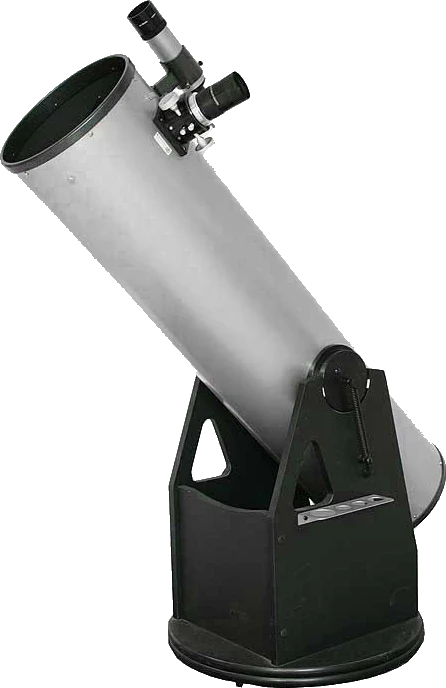
Astris builds its own telescopes under the Nakshatra Scopes brand.

A Dobsonian reflecting telescope standing on the ground

Results

What gets measured gets better

Annual targets and our measurement design, not past results.

  • Participation

    • Attendance ≥ 85%
    • In-year retention ≥ 90%
    • Re-enrolment ≥ 70%
  • Learning

    • Concept gain ≥ 25 percentage points, from the April pre-test to the February post-test (same 20 NCERT-tagged items per band)
    • ≥ 75% of NCERT-tagged questions correct at endline
    • +0.5 on a 5-point science-attitude survey
  • Skills

    • ≥ 80% of logbook sheets completed
    • Logbook average ≥ 3 on a 4-level observation rubric
    • ≥ 90% of members reach a new level
  • Community

    • On average at least 1 family member per student across the three sky-watches
    • ≥ 85% of parents rate the club 4 or 5 out of 5
    • 100% of planned events delivered

Checkpoints

  1. April

    Baseline

  2. Every week

    Attendance, logbooks, parent notes

  3. October

    Midpoint and progress card 1

  4. February

    Endline and progress card 2

  5. March

    Annual impact report to the principal

Parents get a WhatsApp note every week and a progress card twice a year. The school gets a termly impact view and an annual report.

Outcomes

What changes

  • Students

    Find their way around the night sky, use a telescope with confidence, keep a real observation log for a full year. Board-exam physics comes alive for seniors, with projects that can feed IB Internal Assessments, Extended Essays, olympiads and university applications.

  • Parents

    See their child’s curiosity first-hand at three family sky-watches and the end-of-year showcase.

  • The school

    A visible, NEP-aligned STEM activity at no cost, with events that bring families onto campus.

How to start

From yes to first session in 4 weeks

  1. Week 1

    The school says yes; slot, room and coordinator fixed.

  2. Week 2

    A 20-minute assembly demo with a live telescope view or a safe solar projection; the parent note goes home.

  3. Week 3

    Enrolment opens online, with direct payment to Astris.

  4. Week 4

    The club is confirmed at 25+ students; first session and April-style baseline.

Get a quote for your school

Tell us your school, city and the grades you would like to start with, and we will send a quote and the full proposal.

Who runs it

Why Astris

  • ISRO — Indian Space Research Organisation

    ISRO-registered

    Space Tutor

  • 50,000+

    students taught astronomy

  • 500+

    astronomy camps conducted

  • Nakshatra Scopes

    our own telescopes

Rohit Agrawal

Founder

Founded Astris Space to make astronomy something students do, not just read about. He has taught astronomy to more than 50,000 students and has led astronomy tours and camps for years, from dark-sky nights near Delhi to astrophotography expeditions in Ladakh.

Harshavardhan Patil

Co-founder (IIT Roorkee alumnus)

Leads marketing and growth at Astris Space, and brought IIT Roorkee into the programme’s development, including its quality checks.

Quality-checked with IIT Roorkee.

IIT Roorkee was involved in creating the programme and carried out quality checks on its curriculum and activities.

What comes next

Where the club can lead

  1. 1 · Year 1

    Astronomy Club

    One batch of 25–40 students proves the interest.

  2. 2 · Years 2–3

    The full cycle

    Years B and C; members level up and mentor juniors.

  3. 3 · When ready

    AstroEd Space Lab

    A permanent lab and curriculum for the whole school.

    Explore AstroEd Space Lab →

Offer: Schools that move to an AstroEd Space Lab within two years of starting the club receive Rs 1,00,000 off the lab package, and club members become the lab’s first student ambassadors.

FAQ

Questions schools ask

Will it clash with academics?

No. One weekly slot that the school chooses, no exams, and no homework beyond a short logbook.

What if not enough students enrol?

The club only starts at 25 students. If it doesn’t reach 25, every family gets a full refund.

Who is responsible during sessions?

Astris educators run every session. The school’s coordinator teacher is the point of contact.

How will parents see progress?

Weekly WhatsApp notes, progress cards in October and February, three family sky-watches and the end-of-year showcase.

Is solar observing safe?

Yes. Only certified solar filters or projection, always supervised by an educator. The Sun is never viewed directly.

What about transport for evening events?

Families arrange it; the school decides the timings.

Can our teachers join?

Yes, teachers are welcome to join sessions. It’s optional.

Does it work for IB and ICSE schools?

Yes. There is an IB mapping (PYP, MYP, DP), and ICSE mapping is available on request.

What does the school pay?

Nothing. Parents enrol and pay Astris directly.

Every astronomer started with a question. Let’s give your students the next one.

Book a free 20-minute assembly demo

A live telescope view or a safe solar projection, in your school assembly. Free.

Grades you’d like to start with

Fields marked * are required. We use your details only to arrange the demo.