

Deep-Sky Astrophotographyfrom Delhi
Learn how modern astrophotographers capture nebulae and deep-sky objects even from heavily light-polluted urban skies.
A hands-on weekend workshop that takes you through the complete deep-sky imaging workflow — sky, equipment, acquisition, calibration, stacking and processing — from one of the most light-polluted skies in the country, using the same narrowband techniques professionals rely on.
Everyone is told the same thing: you cannot photograph the deep sky from a city. This workshop exists to prove the exception — and to teach you exactly how it is done.
Over one weekend you will run a complete deep-sky astrophotography workflow from Delhi — from planning a target and setting up the rig, to capturing narrowband data, calibrating it, stacking it and processing it into a finished image. You will leave understanding not just which buttons to press, but why urban deep-sky imaging works, and how to keep doing it on your own.
The urban problem
City light pollution is broadband — it floods the whole spectrum and buries faint deep-sky objects under an orange glow. Ordinary imaging from Delhi barely records them.
The narrowband answer
Narrowband filters accept only the few wavelengths nebulae emit at and reject the rest of the city’s glow — so the deep sky reappears, even from Delhi.
By the end of the weekend, you will understand
- 01Why deep-sky imaging is difficult from Delhi
- 02How light pollution affects astronomical imaging
- 03How narrowband imaging overcomes urban light pollution
- 04How to select suitable deep-sky targets
- 05How to plan an imaging session
- 06How to operate the imaging setup
- 07How to capture quality data
- 08How calibration frames work
- 09How stacking improves signal-to-noise
- 10How to process deep-sky data
- 11How to build a complete final astrophotography image
- 12How to continue astrophotography independently afterwards
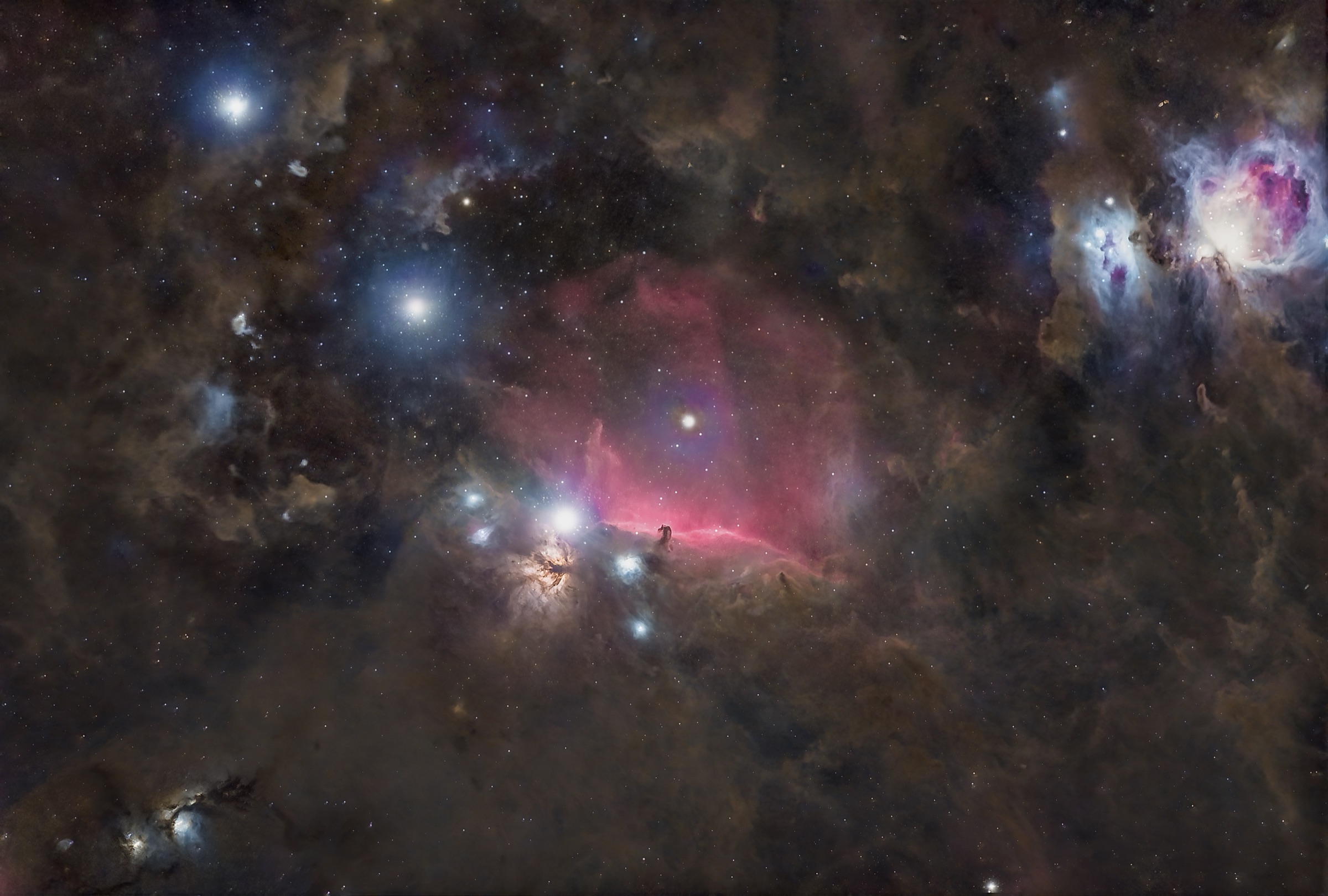
Three wavelengths that beat the city
City light pollution is broadband — it smears energy across the whole spectrum. Emission nebulae glow at a few precise wavelengths. Narrowband filters accept only those wavelengths and reject nearly everything else, so a nebula can be recorded cleanly from a sky where it is otherwise invisible.
Hydrogen-alpha · Glowing hydrogen in emission nebulae
A narrow 656nm window that sails through most city light pollution — the backbone of urban deep-sky imaging.
Oxygen-III · Doubly-ionised oxygen in planetary & emission nebulae
Teal-blue detail in nebulae and supernova remnants, isolated from the broadband glow of the city.
Sulphur-II · Ionised sulphur in emission nebulae
The third narrowband channel, combined with Hα and OIII into the classic SHO “Hubble palette”.
From raw sky to a finished deep-sky image
- Sky
- Equipment
- Acquisition
- Calibration
- Stacking
- Processing
- Final DSO Image
Two days, eight sessions, one finished image
Weekend workshop · Saturday night + Sunday night.
Understanding, Equipment & Acquisition
Understanding Astrophotography
Equipment
Narrowband Imaging
Practical Setup
Live Imaging Session
A real deep-sky acquisition session from Delhi. You follow the actual workflow — framing, focusing, guiding and capturing narrowband subframes — rather than watching slides.
Calibration, Stacking & Processing
Data Calibration
Stacking
Processing
Final Image
Take the acquired dataset through the complete workflow — Raw Data → Calibrated Data → Stacked Data → Processed Final Image — and walk away with a finished deep-sky photograph made from Delhi.
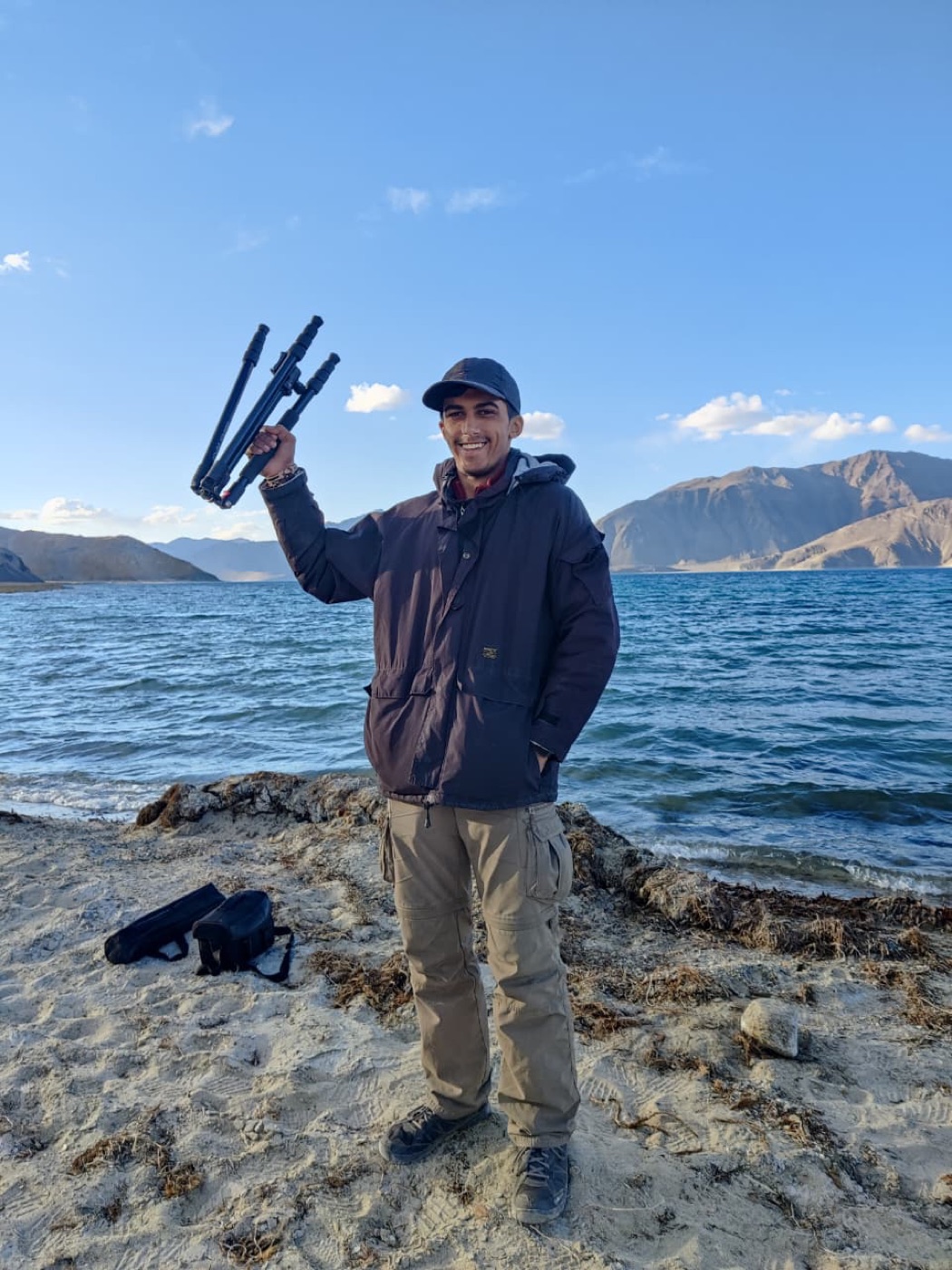
Jhankrit Ahuja
Professional Astrophotographer & Mentor
Jhankrit Ahuja
Jhankrit Ahuja is a professional astrophotographer specialising in Milky Way landscapes, deep-sky imaging, timelapse cinematography and high-altitude astrophotography. With years spent chasing dark skies across the Himalayas, his work bridges the technical precision of astronomy with the artistry of landscape photography. As an educator, he is known for a patient, hands-on teaching style that takes complete beginners to confident night-sky photographers.
The same professional astrophotographer who leads our Astroventure Astrophotography expedition in Ladakh — here focused on pulling the deep sky out of an urban night.
Built for imagers, students and the seriously curious
What’s included
- Full two-day, two-night workshop with a professional astrophotographer
- Live deep-sky acquisition session on real equipment
- Complete narrowband imaging instruction (Hα · OIII · SII)
- Hands-on calibration, stacking and processing walk-through
- A finished deep-sky image built from the workshop dataset
- Guidance to continue imaging independently afterwards
What to bring
- •A laptop (for the calibration, stacking & processing sessions)
- •Your camera and lens, if you own one (not required)
- •Your telescope / imaging rig, if you have one (not required)
- •Warm layers for the night sessions
- •Curiosity and patience — imaging is a slow craft
You do not need to own a telescope, camera or filters to attend — the live imaging session runs on the workshop’s equipment. If you do own gear, bring it and we’ll help you set it up.
Request a Weekend
Pick a weekend below and send us a request. Workshop fee is shared on enquiry. Limited seats per weekend.
Choose a weekend · September & October 2026
Selected weekend
12 Sept – 13 Sept 2026
Workshop fee
On enquiry
- Full two-day, two-night workshop with a professional astrophotographer
- Live deep-sky acquisition session on real equipment
- Complete narrowband imaging instruction (Hα · OIII · SII)
- Hands-on calibration, stacking and processing walk-through
Seats are limited and confirmed on a first-come basis. Imaging is subject to weather and sky conditions.
Workshop FAQ
No. The live imaging session runs on the workshop’s equipment, so you can attend without owning a camera. If you do own a DSLR or mirrorless camera, bring it — we’ll help you understand how it fits into a deep-sky workflow.
No. You do not need to own a telescope or any imaging gear. Everything needed for the live acquisition session is provided. If you have a telescope or imaging rig, feel free to bring it.
Yes. The workshop is beginner-friendly and starts from first principles — what astrophotography is, why cities are hard, and how narrowband solves it. It is also genuinely valuable to intermediate photographers who want to understand narrowband and deep-sky processing properly.
Narrowband imaging uses filters that pass only a few precise wavelengths of light — hydrogen-alpha (Hα), oxygen-III (OIII) and sulphur-II (SII) — where emission nebulae glow. Because it rejects the broadband glow of city light pollution, it lets you record nebulae cleanly from skies where they are otherwise washed out.
Yes — that is the entire point of the workshop. Delhi’s sky is heavily light-polluted, but narrowband imaging isolates the wavelengths nebulae emit at, so emission objects can be captured and processed into finished images even from the city. We show you the technique end to end.
Yes to both. Saturday night is a real, live deep-sky acquisition session, and on Sunday you take that dataset through calibration, stacking and processing to a finished image. You experience the full workflow, not just slides.
Very. You participate in the setup, the live imaging and the processing. The goal is that you leave able to plan, capture and process a deep-sky image on your own.
The workshop is led by the same professional astrophotographer who runs our Astroventure Astrophotography expedition — a specialist in deep-sky imaging, narrowband and night-sky processing, with a patient, hands-on teaching style suited to beginners and intermediates alike.
No prior astronomy or astrophotography knowledge is required. Curiosity and a willingness to work through a technical, slow craft are all you need.
Bring a laptop for the processing sessions, warm layers for the night work, and — optionally — your own camera or telescope if you own one. A full joining checklist is shared on booking.